Your program
Mechanical Engineering: program in brief
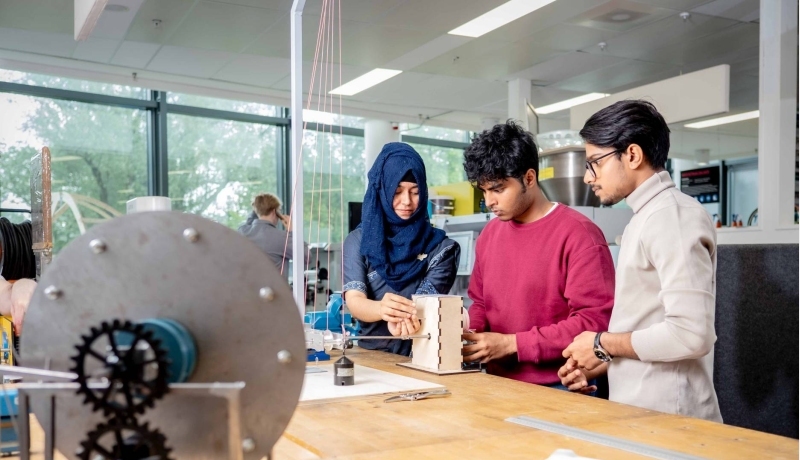
This mechanical engineering degree covers 2 main fields: construction engineering and energy systems engineering. You follow technical subjects related to these fields. You also follow general professional subjects. This way you get the essential technical skills as well as social, intercultural and communication skills.
Throughout your degree you apply your knowledge in team projects. Create a windmill. Or design a heat pump. Finally, you get loads of professional experience. How? By doing a mechanical engineering internship and a graduation project.

Meet lecturers & students
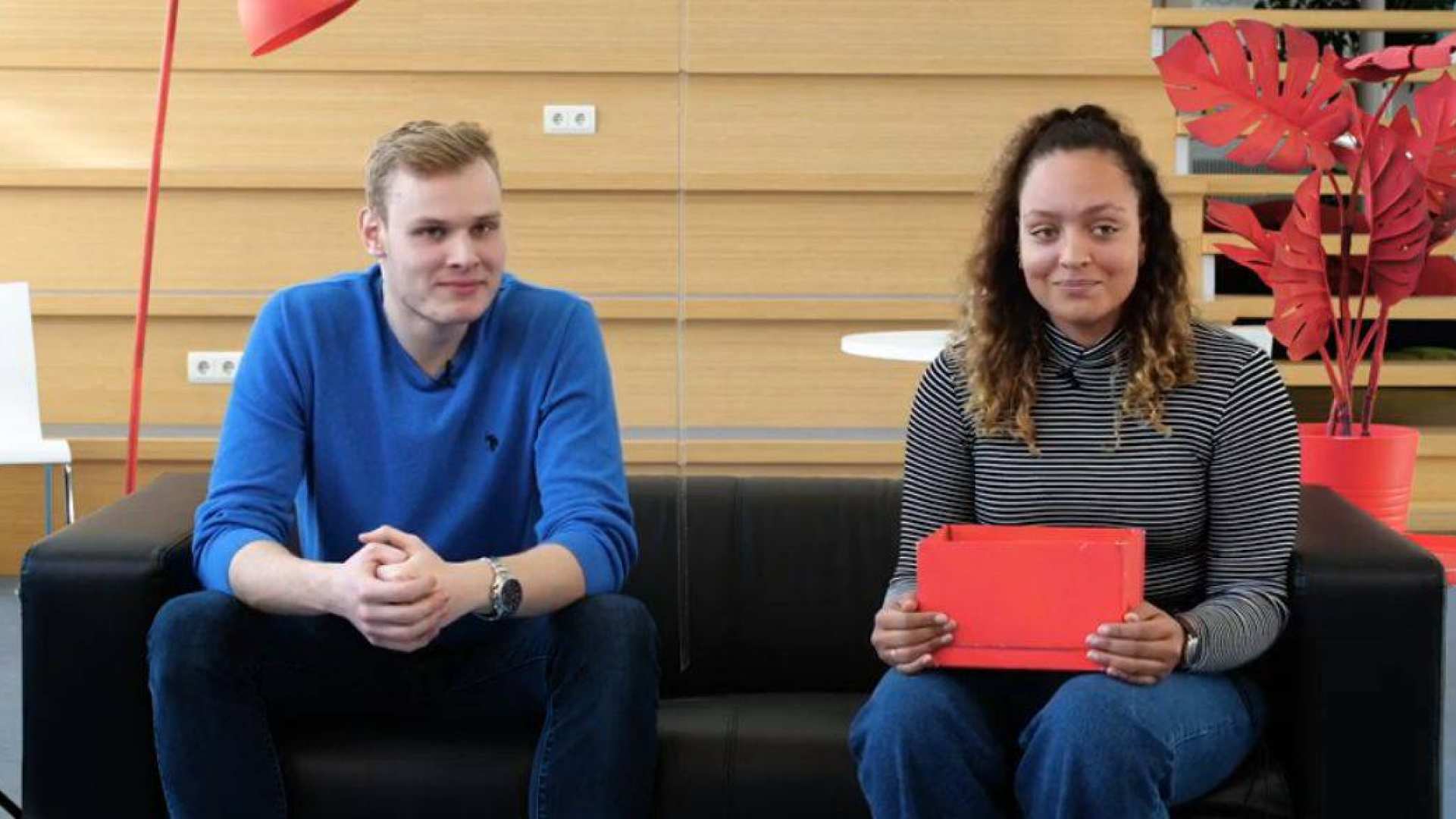
Get an inside view of the Mechanical Engineering program at HAN. Become a student for a day, join a sample lecture or meet 1:1 with a lecturer or student online. We are currently offering the following activities:
- Meet 1:1
- Student for a Day


Solid foundation
Your 1st year gives you a solid foundation in construction engineering and energy systems engineering. You follow a range of engineering subjects and you develop your professional skills. Also, you work on projects. These are team projects with your classmates and students from other disciplines, like automotive and electrical engineering.
Subjects in 1st year
Each semester has a different focus. In semester 1 you focus on construction engineering and in semester 2 on energy systems engineering.
Construction Engineering
- Statics, Dynamics, Mechanics of Materials
- Constructional Components
- Materials Science and Engineering
- Production Techniques
- 3D Computer Aided Design
- Mathematics
- Practical Project Work, Workshop Production
- Professional Skills
Energy Systems Engineering
- Thermodynamics, Fluid dynamics
- Energy Systems Engineering
- Sustainable Energy Techniques
- Basics of Design Techniques
- 3D/2D Computer Aided Design
- Mathematics
- Introduction to Electrical Engineering
- Introduction in Programmable Logic Controllers
- Research Skills
- Practical Energy Systems Project Work
- Professional Skills
Academic calendar
The academic year runs from September to August. In that time you have 42 weeks of education. The rest of the time you have holidays.
Coaching
Are you missing home? Are your classes too challenging? Want advice about your internship? Your study coach is there to help you with such issues. Or you can discuss them with your learning team. This is a group of 6-8 Mechanical Engineering students, supported by a learning team coach (teacher). The team meets at set times throughout the year.
Credits
HAN uses the European Credit Transfer System (ECTS). This system is part of the bachelor-master structure. ECTS credits are a measure of the workload of a degree program.
Personal Study Advice
In your 1st year, you’ll meet with your study coach a few times to talk about how you’re doing—both personally and in your studies. At the end of the year, you’ll receive Personal Study Advice. This advice helps you decide whether this program is the right fit for you. When giving this advice, we don’t only look at the credits you’ve earned. We also consider your motivation, engagement, effort, attitude, attendance, and any personal circumstances. Are you in the right place? Does this program suit you?
The Personal Study Advice is not binding. So, whatever the advice is, you decide whether you want to continue with the program.

Growing independence
In your 2nd year you go deeper into constructional design and energy systems design. You continue working on your professional skills and various mechanical engineering projects. The difference is that you are now working more independently. Your projects are more complex and you work for external project owners!
Subjects in 2nd year
In each semester you focus on a different topic. In semester 1 it’s construction design. Semester 2 is about energy systems design. The subjects are as follows:
Construction Design
- Dynamics
- Mechanics of Materials
- Materials Science and Engineering
- Additive Manufacturing
- Constructional Principles
- Design and Analysis Techniques
- Finite Elements Method and Motion
- Motors and Drives
- PLC and LabVIEW Programming
- Advanced Mathematics
- Law and Regulations
- Multidisciplinary Project
- Professional Skills
Energy Systems Design
- Thermodynamics
- Combustion Principles
- Energy Systems, Heat pumps
- Air Conditioning Techniques
- Solar and Wind Energy
- Computational Fluid Dynamics
- Systems Modelling
- Control Systems
- Multidisciplinary Project
- Professional Skills

Professional experience
In your 3rd year you follow subjects on production facility design. You continue working on your professional skills and you start learning about business economics. Most importantly: you take a big step towards becoming a professional mechanical engineer. How? By gaining practical experience during your internship.
Subjects in 3rd year
- Modeling and Simulation (Control systems, Flow Dynamics en Mechanics)
- Integral Design
- Design Techniques for a Production Facility
- Smart Production, Internet of Things
- Selected Topics in Mechanical Engineering
- Production Optimization
- Professional Skills
Internship
Your internship is your first chance to work as a professional mechanical engineer. Where you’ll go? To an international company or research institute. You can choose from companies like Marel, Mars, Festo, DAF, Scania, NXP, ASML, Besi, Nuon, Heinz-Kraft or Bosch. Another option is to get a position at one of our research groups. A thorough preparation program gets you started. The internship lasts for 1 semester.
Experience it for yourself!
Want to discover whether Mechanical Engineering at HAN is the right choice for you? Experience it for yourself at an Open Day. Our students and staff look forward to meeting you there!

Research
This mechanical engineering degree is connected to various HAN research groups. What does that mean for you? As a student you get to work on actual research projects for external project owners. In your 3rd year you join a professional learning community together with staff from these research groups. The community shares knowledge and findings. One of the research groups is HAN’s Sustainable Electrical Energy Centre of Expertise (SEECE). Other groups are Control Systems Engineering, Sustainable Energy and World Class Performance.

Graduation year
Your 4th and final year of your Mechanical engineering degree. First, you complete a minor. This is a semester course where you can focus in greater detail on a mechanical engineering subject. Another option is to get a broad understanding of a related field. Either way, the choice of topic is up to you. Second, you do your graduation assignment. This is where you do independent research on a real issue. Your client? An internationally oriented company or organization.
Minor
HAN offers a number of interesting minors in the field of electrical and automotive engineering. Another option is studying at another university or even going abroad. You get to choose the subject. Are you interested in continuing your studies after you bachelor degree? Then take a bridging program for your minor. This gives you a thorough preparation for the next step in your study career.
Graduation assignment
The final step in your mechanical engineering degree: the graduation assignment. Your task is to research a real issue for a company or organization. Where? You could go to an internationally renowned company, for example Marel, Mars, Festo, DAF, Scania, NXP, ASML, Besi, Nuon, Heinz-Kraft or Bosch. You might prefer a smaller, innovative firm in the region. Or one of the research groups. During the assignment you work as an independent mechanical engineer. You’re not on your own though. A company coach and HAN lecturer are there to guide you.
Bachelor of Science in Mechanical engineering
Now you have your Bachelor of Science in Mechanical Engineering. Congratulations! The program you've completed is accredited by the Accreditation Organization of the Netherlands and Flanders (NVAO). That means you now have an internationally recognized degree. Are you ready to join an international company? Or further your expertise with a master degree?
Bachelor of Science in Mechanical engineering

Careers
Find out about job opportunities, experiences of alumni and options for further studies in Mechanical Engineering.