Program
Electrical and Electronic Engineering in a nutshell
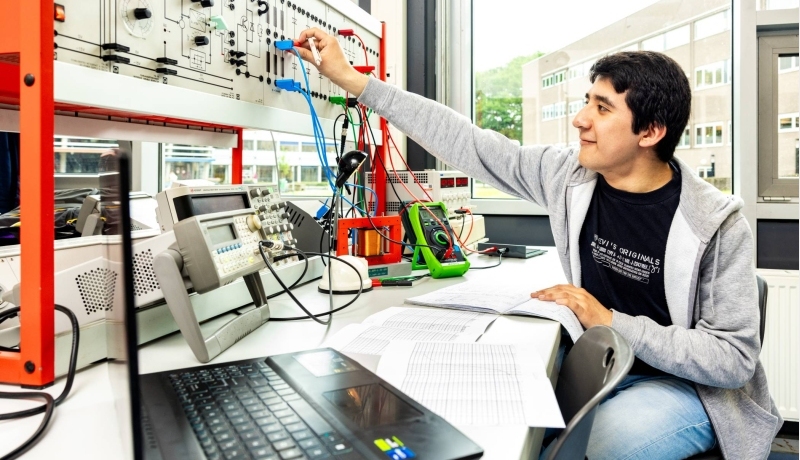
Electrical and Electronic Engineering prepares you for a career as an electrical engineer. From day one, you combine theory with hands-on projects and work closely with classmates and industry professionals. This helps you build technical expertise, teamwork skills, and real-world experience.
The program focuses on industrial and power systems. You'll learn to design smart automation and motion control systems used in manufacturing, healthcare, traffic management, and logistics. You'll also explore sustainable energy systems, from electricity generation and distribution to renewable energy sources such as solar and wind power. In addition, you'll learn how to develop efficient electric drives.
By combining technology, innovation, and sustainability, you'll be ready to help shape the smart and energy-efficient systems of the future.

Meet lecturers & students
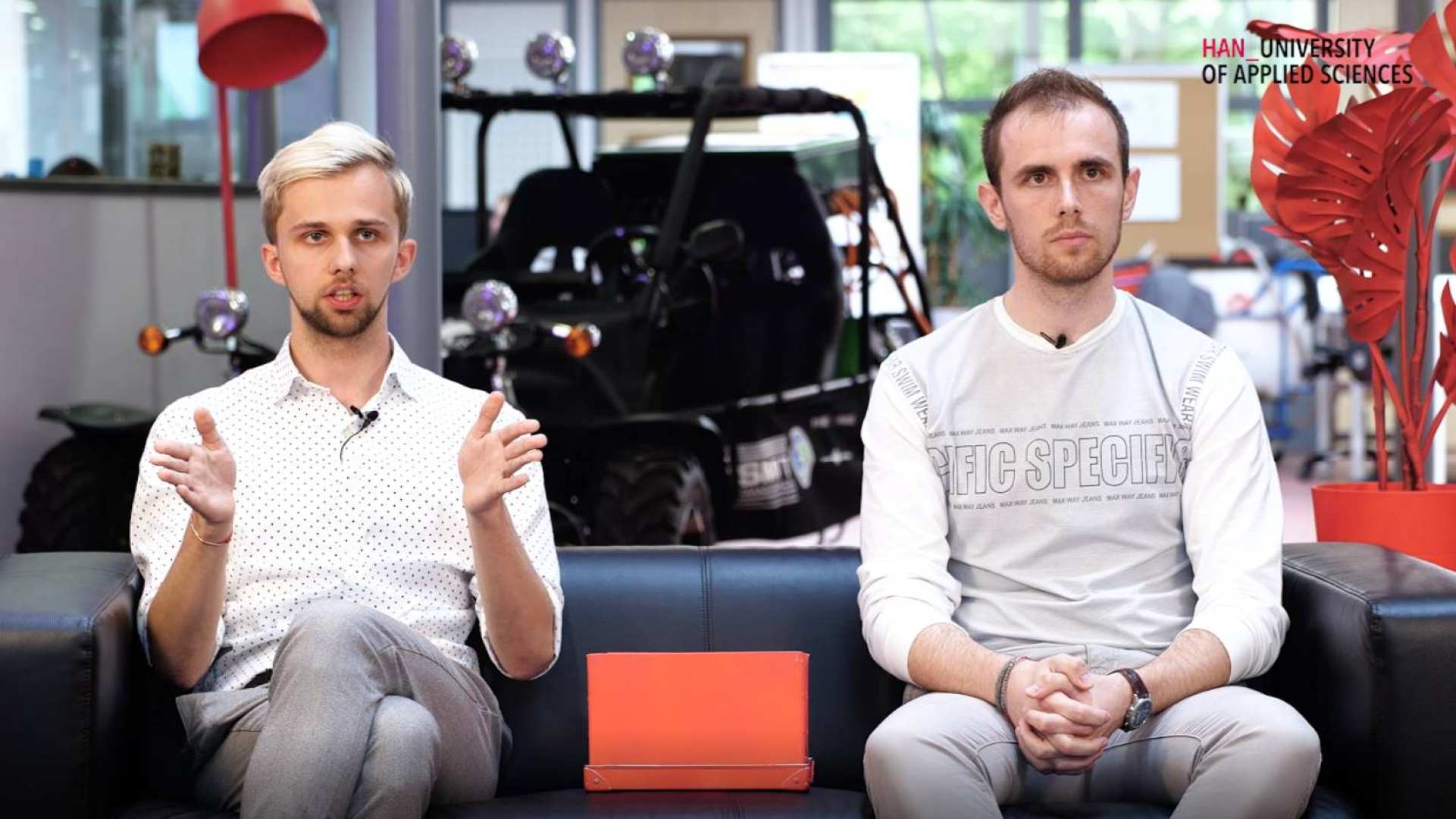
Get an inside view of the Electrical and Electronic Engineering program at HAN. Become a student for a day, join a sample lecture or meet 1:1 with a lecturer or student online. We are currently offering the following activities:
- Meet 1:1
- Student for a Day


Solid foundation
Subjects in your 1st year include Electrical Circuits, Electromagnetism, Electronics and Microcontrollers. You also dive into fascinating projects, like developing your own measuring equipment or developing an autonomous vehicle.
Subjects in 1st year
When you just start studying, performing real work tasks might feel like something that’s in the distant future - but it’s not! Starting from year 1, you’ll frequently be in the labs to work on practical assignments. Your courses:
Electrical Engineering Fundamentals
- Mathematics
- Electrical Circuits
- Measuring Lab
Electrical Design
- Sustainable Electricity Grid
- Magnetism and Transformers
- Mechanics and Electrical Machines
Electronic Design
- Electronic Semiconductor Components
- Microcontroller Programming
Projects
- Variety of interesting assignments
- Workshops: Network Simulation
- Workshops: Printed Circuit Board design and Realization
- Workshops: Research Methods
- Professional Skills
Academic calendar
The academic year runs from September to August. In that time you have 42 weeks of education. The rest of the time you have holidays.
Coaching and support
Are you missing home? Are your classes too challenging? Want advice about your internship? Your study coach is there to help you with such issues. Or you can discuss them with your learning team. This is a group of 6-8 Electrical and Electronic Engineering students, supported by a learning team coach (teacher). The team meets at set times throughout the year.
Credits
HAN uses the European Credit Transfer System (ECTS). This system is part of the bachelor-master structure. ECTS credits are a measure of the workload of a degree program.
Personal Study Advice
In your 1st year, you’ll meet with your study coach a few times to talk about how you’re doing—both personally and in your studies. At the end of the year, you’ll receive Personal Study Advice. This advice helps you decide whether this program is the right fit for you. When giving this advice, we don’t only look at the credits you’ve earned. We also consider your motivation, engagement, effort, attitude, attendance, and any personal circumstances. Are you in the right place? Does this program suit you?
The Personal Study Advice is not binding. So, whatever the advice is, you decide whether you want to continue with the program.

Growing independence
In the 2nd year of Electrical and Electronic Engineering, you start working more independently. Subjects include Control Systems, Data Communication and Electronics. You continue with your specialization. And you work on innovative team projects.
Subjects in 2nd year
Electronics Design, Systems and Signals
- Electronics
- Control Systems
- Data Communication
Power Systems
- Power Electronics and Inverters
- Electrical Drives and Machines
- Distribution and Low Voltage Grid
Working on real company projects
Working on real company projects is the best way to discover your strengths and improve your skills. Together with your fellow students, you work on a company project 3 days a week.
For example, you could be working on a:
- Bicycle Simulator
- Small Hydrogen Vehicle
- Self-driving trolley
- Baby Patient Simulator
- Activating Parkinson Patients with sensoring

Professional engineering experience
In your 3rd year you take a big step towards becoming a professional electrical engineer. Specialize further by working on innovative projects. Like Parallel Robot Design or IoT-enabled Fitness Environment. Also, do an electrical engineering internship at a research institute or company.
Subjects in 3rd year
Industrial Control Systems
- Systems Modelling
- Advanced & Servo Control
- Discrete Event Systems
- Industry 4.0
Internship
Your Electrical Engineering internship gets you ready for the international job market. Where you go? That depends on your specialization. You could go to TenneT. That’s one of Europe’s top 5 electricity transmission operators. Or you could go to Prodrive. That’s an electronic and mechatronic solutions firm. Before you start your internship, you get a thorough preparation program.
Experience it for yourself!
Want to discover whether Electrical and Electronic Engineering at HAN is the right choice for you? Experience it for yourself at an Open Day. Our students and staff look forward to meeting you there!

Research
Throughout your studies you work on real-life research projects. The projects are for companies and organizations in the energy sector. How’s that possible? Your program is linked to HAN’s research center SEECE. SEECE develops and shares knowledge about innovations in electrical energy. Your role? To work on electrical engineering projects alongside lecturers and researchers. For example, on topics like solar power and wind energy.

Graduation year
This is the 4th and final year of your Electrical and Electronic Engineering degree. First, you choose your minor. This allows you to broaden your knowledge. Or to gain more in-depth knowledge of a subject you’re interested in. Second, you choose your graduation assignment. This is where you research an issue for a company or organization.
Minor
HAN offers great minors for Electrical and Electronic Engineering students. For example, you can sign up for Embedded Vision Design or Power Minor. Or what about broadening your experiences even further? You could study at another university, for example. Or even go abroad. Perhaps you want to continue with the Master in Engineering Systems. Then a pre-master program is a smart option for your minor.
Graduation assignment
Your final challenge in Electrical and Electronic Engineering: the graduation assignment. Here you research an issue for a company or organization. Which company? That could be a large international firm, like Océ (part of Canon). Or Liander, the largest grid operator in the Netherlands. Or a smaller, innovative company in the region. Your research results will help solve an issue they are facing.
Bachelor of Science in Electrical and Electronic Engineering
After 4 years of study you have earned your Bachelor of Science in Electrical and Electronic Engineering. Congratulations! The program you've completed is accredited by the Accreditation Organization of the Netherlands and Flanders (NVAO). That means you now have an internationally recognized degree. Ready to join an international company? Or further your studies with a master?
Bachelor of Science in Electrical and Electronic Engineering

Careers
Find out about job opportunities, experiences of alumni and options for further studies in Electrical and Electronic Engineering.
