Careers after graduation
Beyond the classroom: How student racing and motorsport shaped Bruno's engineering career
As a 2024 Bachelor Automotive Engineering graduate from HAN University of Applied Sciences, Bruno's journey took him from performing basic maintenance on his own vehicles to working with race teams, developing aerodynamic components, and contributing to vehicle testing at one of the world's leading automotive performance divisions.
Starting with Passion, Not Experience
When Bruno Pereira arrived at HAN from Portugal to study Automotive Engineering, he had plenty of enthusiasm but very little hands-on engineering experience.
Like many automotive enthusiasts, he had learned the basics by maintaining his own car and motorcycle. Oil changes, routine servicing, and small repairs were familiar tasks, but he lacked the tools, workshop facilities, and experience needed to take on larger technical projects.
"I could do the basics on my own vehicles, but I didn't really have the equipment or the space to go much further than that," Bruno recalls.
What he did have was curiosity and a strong desire to learn. HAN's practical approach to engineering education would soon provide exactly the opportunities he needed.
I realized that motorsport is much more accessible than many people think. The key is to start small and keep building experience.
The First Real Step into Engineering
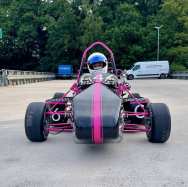
A turning point came during Bruno's second year when he joined HFS, HAN's student racing team. For the first time, he was working on complex mechanical systems in a team environment where theory and practice came together.
Over the next two years, HFS became an essential part of his development as an engineer. The experience exposed him to real engineering challenges, from troubleshooting mechanical issues to collaborating with fellow students under tight deadlines.
"Joining HFS was my first big step into mechanical engineering in practice. It showed me what engineering looks like outside of textbooks."
Working alongside other motivated students also helped him develop the teamwork, communication, and problem-solving skills that would become invaluable throughout his career.
Building a Race Car from the Ground Up
While HFS provided a strong foundation, one of Bruno's most memorable experiences began outside the university.
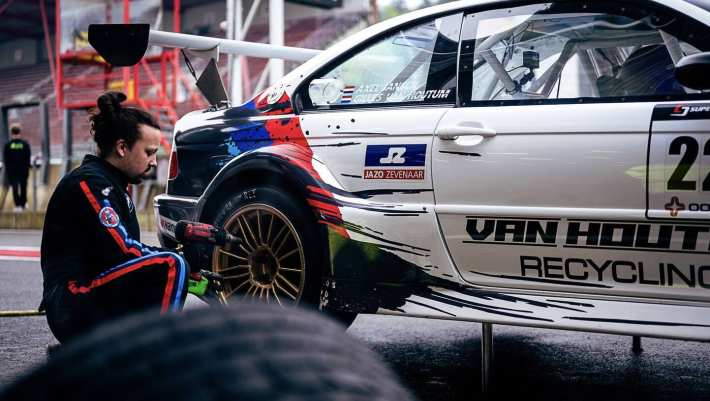
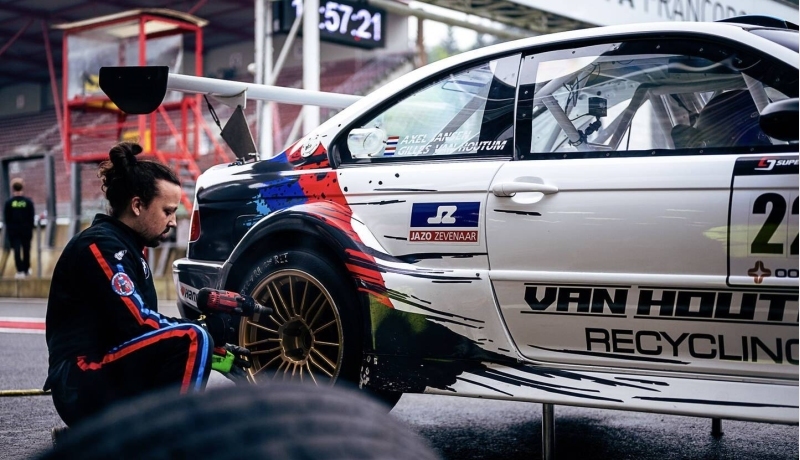
Together with a group of friends, he helped launch Regterschot Racing, an ambitious project focused on transforming a standard road car into a fully-fledged race car.
Unlike professional race teams with substantial budgets and resources, Regterschot Racing relied almost entirely on the dedication, creativity, and commitment of its members.
"We built the car ourselves and were involved in every step of the process. That is what made it such an incredible learning experience."
The project involved everything from stripping down the vehicle and improving its performance to ensuring it met racing requirements. Every component presented a challenge, and every challenge presented an opportunity to learn.
Most of the work took place during evenings and weekends. What started as a hobby quickly turned into a significant commitment, but one that Bruno embraced wholeheartedly.

Discovering Aerodynamics
As the race car project evolved, Bruno found himself increasingly drawn to the world of vehicle aerodynamics.
Through a self-initiated internship opportunity, he began designing a floor and diffuser package for the Regterschot Racing car. The project allowed him to apply engineering principles directly to a vehicle that would be driven competitively.
The work required balancing performance objectives with practical constraints such as manufacturing possibilities, budget limitations, and vehicle regulations.
The challenge fascinated him.
"Aerodynamics became one of my favourite areas because you can make relatively small design changes that have a significant impact on vehicle performance."
The project continued beyond the internship itself. During HAN's Motorsport Minor, Bruno further developed the aerodynamic package, refining designs and gaining a deeper understanding of airflow management and vehicle dynamics.
For him, the project perfectly illustrated the value of combining academic knowledge with practical engineering experience.
Countless Hours in the Workshop
One aspect of motorsport that often goes unseen is the amount of preparation required before a car ever reaches the racetrack.
Bruno remembers spending countless evenings in the workshop trying to prepare the vehicle for upcoming race events.
There were always deadlines to meet, technical problems to solve, and improvements to implement. Some solutions worked immediately, while others required multiple redesigns and revisions.
"I will never forget the hours spent trying to get the car ready for a race. There was always something that needed attention, but those experiences taught me more than any classroom could."
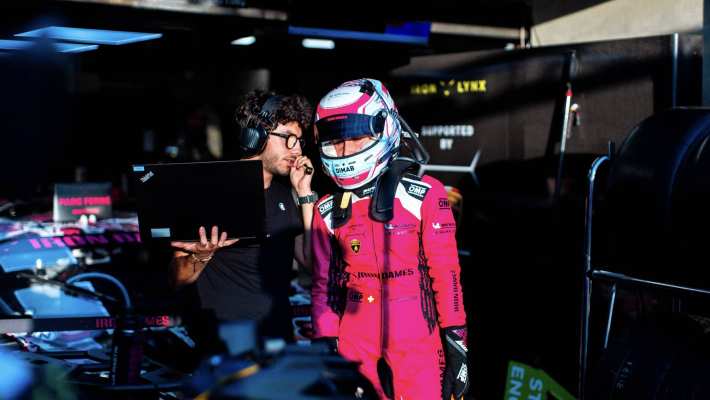
In addition to his role at Regterschot Racing, Bruno also gained valuable experience working as a mechanic for Koopman Racing. This offered a glimpse into professional motorsport operations and the high standards required within competitive racing environments.
The combination of amateur and professional motorsport experience helped him build a broad set of technical skills while strengthening his understanding of race team operations.
My graduation project showed me how vehicle development happens at a professional level and gave me confidence in my abilities as an engineer.
A Graduation Assignment at Hyundai N
The final chapter of Bruno's studies brought him to Germany, where he completed his graduation assignment with Hyundai N's performance division.
Building upon his previous aerodynamic work, he became involved in aerodynamic testing activities for a prototype vehicle.
The experience provided an opportunity to work in a highly professional engineering environment while contributing to real vehicle development projects.
For Bruno, it represented a major milestone. Just a few years earlier, he had been limited to basic maintenance work on personal vehicles. Now he was participating in the testing and development of advanced automotive technology.
"My graduation project showed me how vehicle development happens at a professional level and gave me confidence in my abilities as an engineer."
Breaking into Motorsport Is Possible
For many years, Bruno viewed motorsport as a career path reserved for a fortunate few. The industry seemed difficult to access and highly competitive.
However, his own experiences taught him a different lesson.
Student teams, grassroots racing projects, internships, and volunteer opportunities all provided stepping stones that helped him gradually build experience and industry connections.
"I realized that motorsport is much more accessible than many people think. The key is to start small and keep building experience."
His advice to future students is simple: get involved as early as possible. Whether through a student team, local workshop, racing organization, or engineering project, practical experience is often the fastest route into the industry.
Choosing a Different Future
Despite achieving his childhood ambition of working in motorsport, Bruno also discovered the realities behind the profession.
Success in racing often comes with long evenings, extensive travel, and weekends spent at circuits or workshops. During his student years, that lifestyle suited him perfectly.
After graduation, however, his priorities began to change.
One of Bruno's biggest personal goals was to build a family, and he realized that the demanding schedule associated with many motorsport careers might not align with the future he envisioned.
That realization led him to pursue a different path.
Today, Bruno works as a Service Engineer at Hyster-Yale. The role enables him to stay closely connected to the practical and technical side of engineering that he enjoys most, while providing a more predictable work-life balance.
Importantly, it allows him to spend every evening at home with his one-year-old daughter.

Engineering Opens Many Doors
Although motorsport is no longer Bruno's full-time profession, it remains an important part of his life. He still regularly joins Regterschot Racing during team evenings, helping where he can and staying involved with the project that taught him so much.
What was once a career ambition has become a passion-driven hobby.
His story demonstrates the versatility of an Automotive Engineering degree and the wide range of opportunities available to graduates. In the Netherlands, automotive engineers can pursue careers in vehicle development, testing, engineering consultancy, manufacturing, electrification, motorsport, and industrial engineering.
"An automotive engineer graduated in the Netherlands can easily find a job with starting salaries commonly exceeding €4,000 gross per month, depending on the role, sector, and location," Bruno says.
For Bruno, one of the biggest discoveries was that the skills gained during the programme open doors far beyond motorsport, creating opportunities across multiple engineering sectors.
"The biggest lesson I learned is that opportunities are everywhere if you're willing to take initiative. Every project, every internship, and every challenge contributed to the engineer I became."
For Bruno Pereira, the journey from Portugal to the Netherlands did more than launch a successful engineering career. It showed him that following your passion can open unexpected doors, while also helping you discover what matters most beyond work.
You might be interested in
Beyond the classroom: How student racing and motorsport shaped Bruno's engineering career