Master of Molecular Life Sciences bridges gap between lab and management
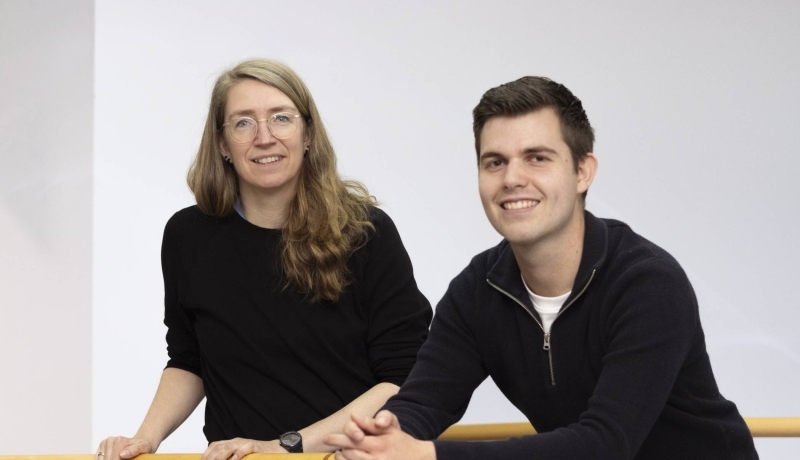
The master program in Molecular Life Sciences introduced a new curriculum at the start of this academic year. Lecturer Marloes Vissers explains what changed, while student Sem Smetsers shares how the new curriculum supports his ambitions.
In the Life Sciences field, there is often a gap between laboratory work and management roles. Ten years ago, the Master of Molecular Life Sciences was created to help close that gap. "Talented laboratory analysts often find it difficult to move into positions such as project manager because they lack certain professional skills," says HAN lecturer Marloes Vissers, who helped develop the program. "Molecular Life Sciences helps bridge the gap between the lab and management."
"No students dropped out this year"
Each year, around 20 students enroll in the program, either full-time or part-time. They attend classes at HAN one day a week. During the rest of the week, they apply their research and project management skills at work or during an internship. "Students learn how to find and evaluate scientific literature so they can design new experiments," says Vissers. "They also learn how project funding works and how research projects are managed."
For years now, the program's strong focus on professional practice has made it highly valued by employers. This academic year, the curriculum was updated to reflect developments in the field. "We now place greater emphasis on big data and artificial intelligence," says Vissers, whose expertise is in infectious diseases and immunology. "The Life Sciences field increasingly relies on complex technologies that generate large amounts of data. We want our students to develop the skills to analyze and work with these datasets."
The program structure has also been redesigned. Some assignments have been moved to different stages of the curriculum and presented differently. "We noticed that the workload was especially demanding during the first part of the program," Vissers explains. "As a result, some students became overwhelmed by the end of their first year. They started missing deadlines, which also affected their learning. The revised structure is more manageable while maintaining the same academic level. As a result, no students have dropped out this year."
There is a greater emphasis on big data and AI
The lab feels like home
Student Sem Smetsers is exactly the type of professional the master program was designed for. Four years ago, he completed HAN's bachelor degree in Life Sciences after realizing that the laboratory—not the forest—was where he felt most at home. Through a part-time job at a golf course, he came into contact with his current employer, Intracare, a company that develops and produces products for the agricultural sector.
"I work in microbiology," Sem explains. "By following this master program, I want to set up and lead my own R&D projects. I've noticed that researchers with an academic background do not always have a clear understanding of the practical realities of laboratory work. Theoretical expertise differs from hands-on laboratory experience. For example, you need to consider how microorganisms are cultivated, the availability of materials, and potential technical setbacks."
Discipline is key
Sem wants to combine the strengths of both worlds. "For example, I now understand much better how to quickly identify the key findings of a scientific article. That helps me understand research challenges more effectively and develop stronger recommendations."
The program does require commitment and self-discipline. On average, Sem spends 8 to 12 extra hours each week studying in his free time. "Before deadlines, you need to put in some extra effort," he says. "At the same time, studying is easier now than it was during my bachelor degree because I can directly connect what I learn to real-world situations. That helps me understand the material more quickly. Sometimes, however, work has to take priority." Vissers explains that the workplace-based learning approach provides flexibility. "That's why workplace learning activities are planned in consultation with both the student and the employer. When work demands change, those activities can simply be rescheduled."
New name and new Chemistry track
The Master of Molecular Life Sciences has been renamed Master of Applied Molecular Sciences. Starting this academic year, the program will offer two tracks: Chemistry and Molecular Life Sciences. Both tracks are available in full-time and part-time formats and are taught in English. More information is available on the program webpage.
Julian Droog
